 English



We use cookies to offer you a better browsing experience, analyze site traffic and personalize content. Part of the tracking is necessary to ensure SEO effectiveness,
By using this site, you agree to our use of cookies.
Visit our cookie policy to learn more.
How to Choose the Right Wire Mesh Storage Cages for Your Warehouse Needs
Aug 10 , 2026
Table of Content
[Hide]
Choosing the right wire mesh storage cage depends on what you need to store, how heavy the goods are, how often they move through the warehouse, and whether the cages must be stacked, folded, or handled by forklift. A suitable cage should provide enough load capacity, fit your available storage space
, and support safe, efficient material handling.
For warehouses, factories, logistics centers, and distribution facilities, wire mesh storage cages are commonly used for parts, cartons, components, tools, and loose inventory that needs to remain visible and easy to move. The right design can improve inventory control while reducing the need for disposable packaging or fixed storage bins.
What Are Wire Mesh Storage Cages Used For?
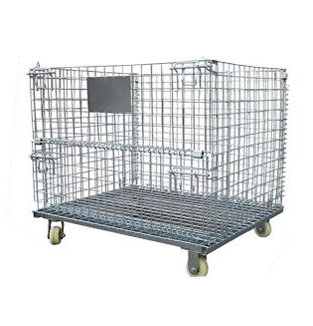
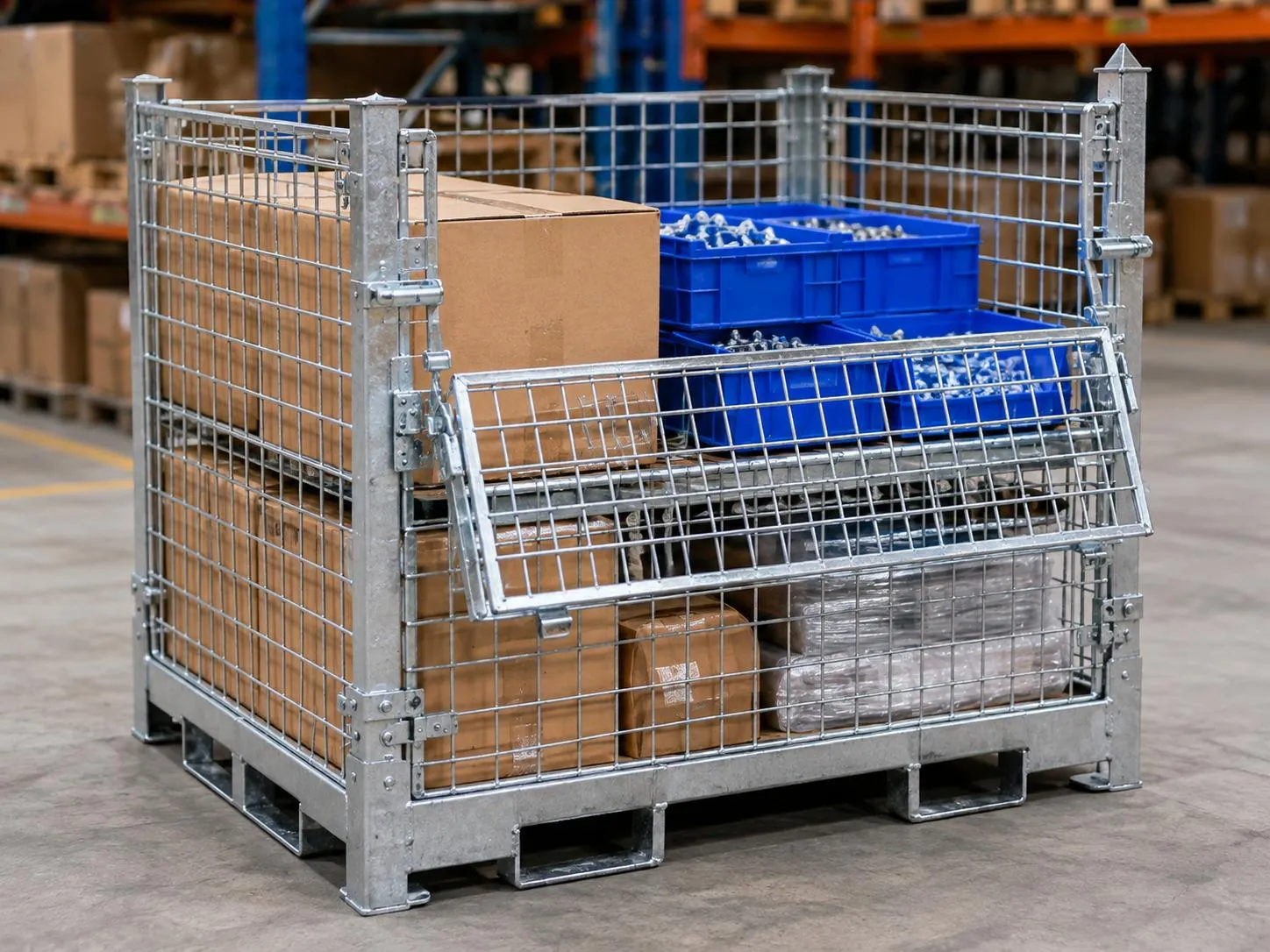
Wire storage cages are reusable metal containers made from welded steel mesh and a rigid frame. Depending on the design, they may be stackable, foldable, forklift-accessible, or fitted with drop-down gates for easier loading and unloading.
Typical applications include automotive parts, industrial components, hardware, packaged goods, warehouse returns, production materials, and temporary inventory.
Compared with closed containers, wire mesh construction provides clear product visibility and better ventilation. This can make stock identification easier and help warehouse teams quickly check whether a cage is full, empty, or waiting for replenishment.
When evaluating wire mesh storage cages, buyers should focus on load capacity, cage dimensions, stacking requirements, mesh size, handling method, and the type of goods being stored.
Choose Cage Size Based on the Goods You Store
The first step is to match the cage dimensions to the inventory.
A cage that is too large may waste floor space and allow small items to shift during handling. A cage that is too small can create overloading or require more units than necessary.
Measure the typical length, width, and height of the goods and consider how they will be arranged inside the cage. If the cage will be used beside a production line, dimensions should also fit the available workstation or aisle space.
For warehouses handling standardized components, using consistent cage sizes can simplify storage planning and make stacking more efficient. For mixed inventory, several cage sizes may be more practical than using one oversized format for every application.
Check the Required Load Capacity
Load capacity is one of the most important selection factors.
The rated capacity of a wire storage cage should be higher than the maximum expected load, not just the average weight normally stored inside it.
Consider:
Maximum product weight per cage
Whether weight is evenly distributed
Whether cages will be stacked while loaded
How frequently they will be moved
Whether forklifts or pallet trucks will handle them
A cage used for lightweight cartons does not need the same structural strength as one used for castings, automotive parts, or metal components.
For heavier warehouse applications, frame thickness, wire diameter, base structure, and welded connection quality all become more important.
Stackable vs Foldable Wire Storage Cages
Two of the most useful features in industrial wire cages are stackability and foldability.
| Feature | Best For | Main Benefit |
|---|---|---|
| Stackable design | Loaded warehouse storage | Better vertical space utilization |
| Foldable design | Empty return transport | Reduces storage and shipping volume |
| Stackable + foldable | Logistics and reusable packaging | Combines storage density and return efficiency |
| Drop-down gate | Frequent picking | Easier product access |
Stackable cages can help warehouses use vertical space without installing additional fixed shelving for every item. However, buyers should confirm the permitted stacking height and whether the rated load applies when cages are stacked.
Foldable cages are especially useful in closed-loop logistics. Once empty, they can be collapsed to reduce the space required during return transport or temporary storage.
For distributors and manufacturers with frequent goods movement, a cage that combines both features may provide better long-term operating efficiency.
Consider Mesh Size and Product Retention
Mesh opening size affects both visibility and product security.
Larger openings reduce material use and can improve airflow, but small parts may fall through or protrude through the mesh. Smaller openings offer better containment for components, fittings, and other compact items.
The appropriate mesh size therefore depends on the smallest item stored in the cage.
If products are very small, additional liners, dividers, or inner containers may be required. Buyers should also consider whether goods need protection from contact with surrounding cages during stacking and transport.
Match the Cage to Your Handling Equipment
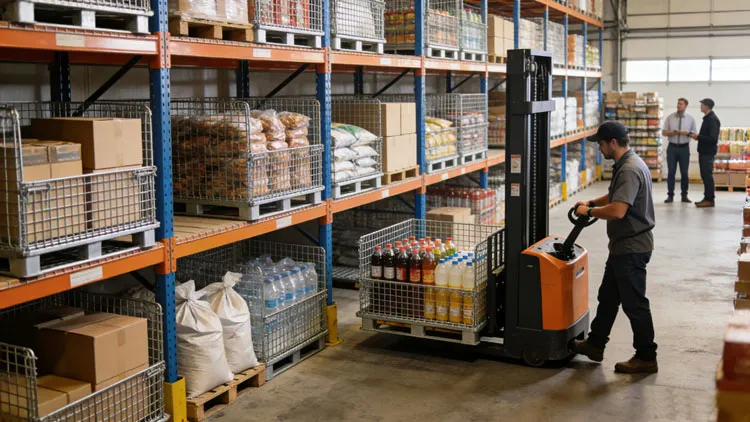
Wire storage cages should fit the warehouse's existing material-handling process.
If forklifts are used, confirm that fork entry points and base clearance are suitable for the equipment. For pallet truck handling, the lower frame design must allow safe access without interfering with wheels or forks.
The warehouse should also consider how cages move between receiving, production, storage, picking, and shipping areas.
A well-selected cage should reduce unnecessary manual handling rather than create an additional transfer step. Standardized cage footprints can also make warehouse layouts easier to organize.
Evaluate Durability and Surface Treatment
Industrial storage cages are exposed to repeated handling, impacts, moisture, and warehouse dust, so durability matters.
Key construction details include welded mesh quality, frame rigidity, hinge strength, latch design, and base reinforcement. Surface treatment also affects corrosion resistance and service life.
Common finishes may include galvanizing, zinc plating, or powder coating depending on the environment and application.
For indoor dry warehouses, standard corrosion-resistant treatment may be sufficient. Facilities with higher humidity or more demanding industrial conditions may require stronger protection.
Consider Warehouse Space and Storage Efficiency
Wire cages should be selected as part of the overall warehouse layout, not as individual containers.
Before ordering, calculate how many cages can fit in the available floor space and how many levels can be stacked safely. Door widths, aisle dimensions, forklift turning space, and loading areas should also be considered.
For operations with seasonal inventory, foldable cages can help free up valuable warehouse space when not in use.
The goal is not simply to maximize cage quantity. The system should support efficient movement, easy identification, and safe access to stored goods.
What Information Should You Send to a Supplier?
A clear RFQ helps the manufacturer recommend a more suitable configuration.
Provide the following information where possible:
Goods or components to be stored
Maximum load per cage
Required cage dimensions
Preferred mesh size
Required stacking levels
Forklift or pallet truck type
Whether foldability is required
Quantity required
Installation or delivery country
Special requirements for finish, gate design, or labeling
Providing this information early can reduce specification changes later and improve quotation accuracy.
Chaoyu offers wire storage cage configurations for warehouse, manufacturing, logistics, and industrial applications. Dimensions, load requirements, surface treatments, and structural details can be adjusted according to different project needs.
Frequently Asked Questions
What is the difference between a wire storage cage and a pallet cage?
The terms are sometimes used interchangeably. A pallet cage usually emphasizes forklift handling and pallet-style storage, while a wire storage cage is a broader term covering reusable mesh containers for warehouse storage and transport.
Can wire storage cages be stacked when loaded?
Many industrial cages are designed for loaded stacking, but the permitted stacking height and maximum load depend on the specific structure. Always confirm the manufacturer's rating before stacking.
Are foldable wire cages suitable for heavy products?
Yes, if the cage is designed and rated for the required load. Foldability does not automatically mean low capacity, but hinge, frame, and base strength must match the intended application.
How do I choose the correct cage size?
Start with the dimensions and quantity of goods stored per cage, then check available warehouse space, handling equipment, and stacking requirements. The best size should support both product fit and efficient material flow.
Can wire storage cages be customized?
Yes. Depending on the manufacturer, dimensions, mesh spacing, gates, surface treatment, labels, and load capacity can often be customized for specific warehouse requirements.
Final Thoughts
The right wire storage cage should match the goods, load capacity, warehouse layout, and handling process rather than being selected by size alone.
For most warehouse buyers, the key factors are cage dimensions, load rating, stackability, foldability, mesh size, forklift compatibility, and durability. Evaluating these points before ordering can improve storage density, simplify material handling, and reduce long-term packaging and replacement costs.
For warehouse or industrial projects, Chaoyu can provide customized wire storage cage solutions based on load requirements, dimensions, stacking needs, and handling conditions, helping buyers choose a configuration that fits both daily operations and future storage growth.

References