English
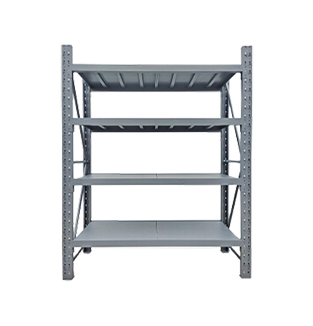
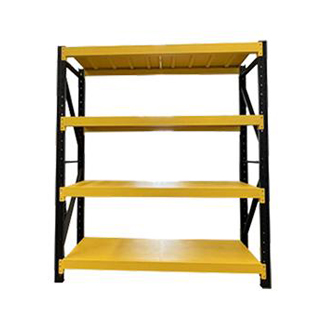
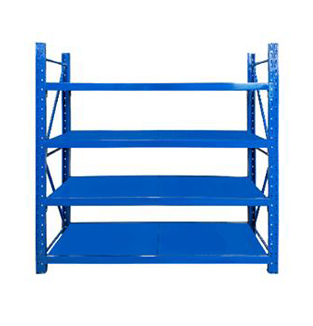
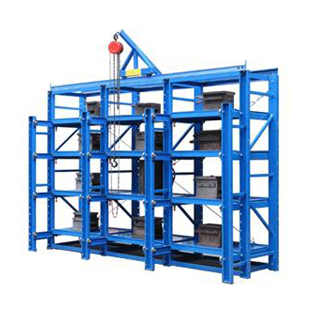
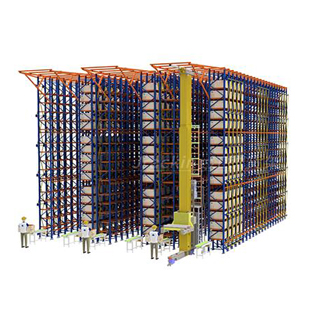
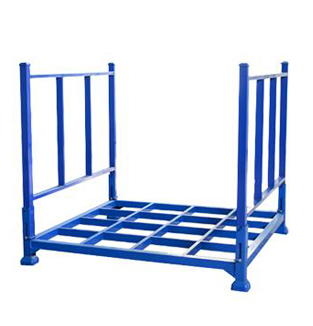
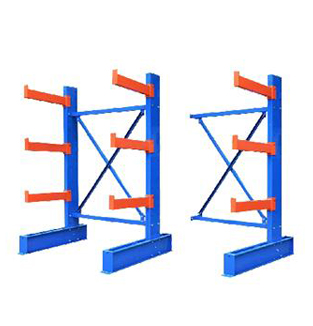
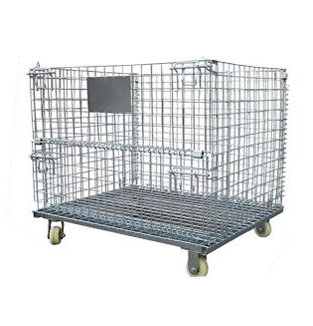
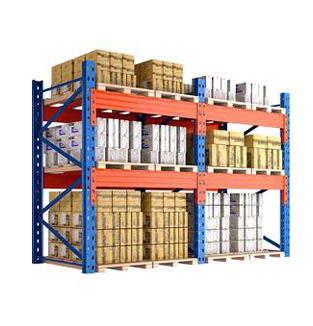
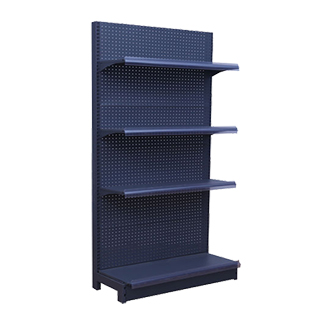



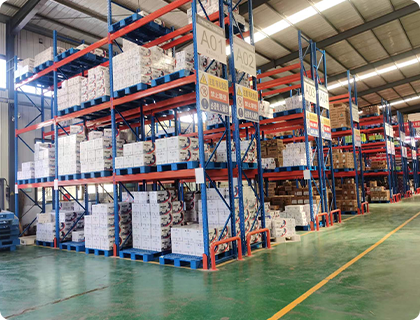
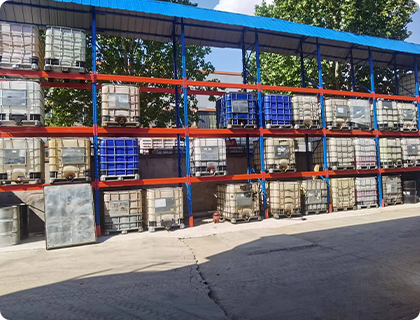
Stillage racks and pallet racks both help industrial facilities use vertical space, organize inventory and reduce goods stored directly on the floor. However, they are designed for different storage workflows.
A stillage rack is an individual, movable storage frame that can often be stacked directly on another compatible stillage. It is commonly used for irregular goods, production materials, temporary inventory and products that need to move between work areas. A pallet rack is a fixed warehouse structure made from upright frames and horizontal beams. It is primarily used to store palletized goods in defined storage locations.
The correct system depends on more than load capacity. Buyers should also compare product dimensions, required access, warehouse height, forklift operation, inventory turnover, layout flexibility and empty-unit storage.
Quick answer: Choose a stillage rack when goods are irregular, storage locations change frequently or the storage unit must move with the products. Choose pallet racking when goods are stored on standard pallets, every pallet needs a defined location and the warehouse requires direct forklift access to individual loads.
Stillage Rack vs Pallet Rack Comparison
| Comparison Factor | Stillage Rack | Pallet Rack |
|---|---|---|
| Basic structure | Individual steel base with posts, frames, mesh sides or custom supports | Fixed upright frames connected by horizontal load beams |
| Storage method | Compatible units are stacked directly on one another | Pallets are placed on beam-supported storage levels |
| Mobility | The complete storage unit can be relocated | The rack remains fixed after installation |
| Floor installation | Normally portable and not permanently anchored | Normally anchored to a suitable concrete floor |
| Suitable goods | Irregular parts, loose materials, tires, textiles and work-in-process goods | Standardized pallets, cartons, packaged goods and finished inventory |
| Individual load access | Lower units may be blocked by units stacked above | Selective pallet racking provides direct access to each pallet |
| Layout flexibility | Easy to relocate, remove or reconfigure | Designed as a planned, long-term warehouse layout |
| Vertical storage | Limited by the approved stillage stack height | Can be designed for multiple levels and high-bay storage |
| Inventory management | Suitable for batches, production materials and temporary stock | Suitable for fixed locations, barcode systems and warehouse management software |
| Typical project type | Flexible industrial handling and temporary storage | Permanent warehouse storage and distribution operations |
Load ratings and stacking limits vary by design. A product should not be selected solely because it is described as “heavy duty” or “stackable.” Always confirm the approved capacity and operating configuration with the manufacturer.
What Is a Stillage Rack?
A stillage rack is a reusable steel storage and material-handling unit. It normally combines a load-bearing base with posts, side frames, mesh panels or specially shaped supports. Some designs are open on all sides, while others contain loose goods with mesh or solid panels.
Chaoyu’s stacking stillage racks are designed for factories and warehouses that need movable, non-permanent storage. Depending on the application, the structure can be made with fixed posts, removable posts, foldable frames or customized supports.
When compatible loaded stillages are stacked, the vertical posts transfer the upper load into the base of the unit below. This creates temporary rack levels without installing fixed upright frames and beams.
Common Types of Stillage Racks
Post stillage: An open steel base with four vertical posts for bulky or irregular materials.
Cage stillage: A mesh-sided or solid-sided unit for containing loose parts and smaller products.
Removable-post stillage: A design whose posts can be removed when the unit is empty.
Foldable stillage: A collapsible unit that reduces empty storage and return transport volume.
Stacking frame: A portable frame placed around goods to create stackable storage.
Custom stillage: A product-specific frame designed around tires, panels, fabric rolls, automotive parts or other goods.
Typical Stillage Rack Applications
Automotive parts and stamped components
Tires, wheels and rubber products
Textile rolls and fabric materials
Metal panels and fabricated parts
Manufacturing work-in-process inventory
Returnable industrial packaging
Seasonal and temporary inventory
Goods that cannot be stacked without a supporting frame
Materials moving between production departments
Loose products requiring mesh or solid containment
What Is Pallet Racking?
Pallet racking is a fixed industrial storage system designed to support palletized goods on horizontal beam levels. Upright frames are installed in rows and connected by beams, creating defined pallet positions that can be accessed by forklifts, reach trucks or stackers.
Selective pallet racking is commonly used where every pallet requires direct access. It is suitable for warehouses with many SKUs, frequent stock movement and fixed inventory locations.
A typical warehouse pallet rack includes:
Upright frames
Horizontal load beams
Horizontal and diagonal bracing
Beam safety locks
Base plates and floor anchors
Row spacers
Pallet support bars or wire decking where required
Column protectors and end-of-aisle barriers
Load capacity plaques
For projects in the United States, the Rack Manufacturers Institute develops design and utilization guidance for industrial steel storage racks. Buyers can review information about applicable rack standards and safety resources through the Rack Manufacturers Institute.
Key Differences Between Stillage and Pallet Racking
1. Movable Storage Unit vs Fixed Storage Structure
A stillage moves with the goods. A forklift can transport the complete loaded unit from receiving to production, temporary storage or dispatch. This can reduce repeated loading and unloading when the same components pass through several operational stages.
Pallet racking remains in a fixed position. The pallets move, but the rack defines permanent storage rows, aisles and inventory locations.
This distinction is especially important in manufacturing. A factory may use stillages to move parts between machines or assembly lines, while pallet racks hold reserve materials and finished goods in the main warehouse.
2. Irregular Loads vs Standardized Pallets
Pallet racking performs best when loads have consistent dimensions, weights and pallet-entry directions. Standardized loads make it easier to determine bay width, frame depth, beam capacity and operating clearance.
Stillage racks are more adaptable to irregular products. Posts, cradles, dividers, mesh walls and support bars can be configured around the shape of the goods.
A custom stillage may be more appropriate when products:
Cannot sit securely on a flat pallet
Roll or shift during handling
Require separation to prevent surface damage
Extend beyond standard pallet dimensions
Need side containment
Must remain in the same frame during storage and transport
3. Direct Access to Individual Loads
Selective pallet racking provides direct access to every pallet position. A forklift can retrieve a pallet without first relocating the loads stored above or below it.
Stacked stillages do not always provide the same access. When the required stillage is at the bottom of a stack, the operator may need to remove the units above it.
For this reason, pallet racking is generally more suitable for:
High-SKU warehouses
Frequent pallet retrieval
Random access to stock
Warehouse management system locations
Order fulfillment and distribution
Stillage racks are often more efficient for batch storage, production materials, seasonal stock and goods that move as complete groups.
4. Permanent Layout vs Flexible Floor Space
Pallet rack rows create a permanent or long-term warehouse layout. The system must be coordinated with building columns, loading doors, emergency routes, sprinklers, forklift aisles and floor anchoring.
Stillage racks provide greater short-term flexibility. Units can be removed when demand falls, moved to a different production zone or rearranged as product volumes change.
This flexibility is valuable when:
Inventory is seasonal
Production lines change frequently
The warehouse handles short-term projects
Floor space must serve multiple purposes
Permanent anchoring is not practical
5. Vertical Space Utilization
Both systems use vertical space, but pallet racks can usually be designed for taller warehouses. Multiple beam levels can be configured around pallet heights, forklift reach and building clearance.
Stillage storage height depends on the maximum approved number of stacked units. The allowable stack can be affected by post strength, base design, load distribution, center of gravity, floor condition and whether the units are used indoors or outdoors.
A stillage should never be stacked simply because its shape appears to allow it. OSHA requires tiered materials to be stable and secured against sliding or collapse. This general principle is explained in OSHA 1910.176 on material storage.
6. Forklift Operation
A forklift handling a stillage normally lifts the entire frame through designated fork-entry points. The forks, fork spacing and truck capacity must be suitable for the combined weight of the stillage and its contents.
When placing a pallet in racking, the forklift must turn into the storage position, lift the pallet above the beam and lower it into place. Rack layout therefore depends heavily on the forklift’s turning radius, right-angle stacking specification, load dimensions and maximum working height.
Toyota Material Handling notes that aisle planning should consider the truck specification together with the pallet and load dimensions, rather than relying on one general aisle measurement. Its guide to calculating forklift aisle width minimums provides a useful overview of these factors.
7. Floor Requirements
Stillage racks generally do not require permanent anchoring, but they still need a stable floor capable of supporting the concentrated loads created by the legs or stacking points.
Pallet rack columns transfer high concentrated loads through their base plates into the warehouse floor. The rack supplier may therefore need information about:
Concrete slab thickness
Concrete strength
Floor levelness
Existing cracks or damage
Embedded pipes and cables
Reinforcement or post-tensioning
Applicable anchoring requirements
8. Inventory Management
Pallet racks support fixed locations. Each pallet position can be identified by row, bay and level, making the system suitable for barcodes, warehouse management software and cycle counting.
Stillage inventory may be managed by unit number, batch, production line or temporary zone. This approach works well when the stillage itself acts as both a storage container and a handling unit.
Load Capacity Comparison
How Stillage Rack Capacity Is Evaluated
A stillage rating normally refers to the maximum load carried by one complete storage unit. A separate limit may apply to the number of fully loaded stillages that can be stacked.
The load rating can be influenced by:
Base-frame dimensions
Post profile and wall thickness
Post-to-base connections
Weld design and manufacturing quality
Stacking cups, pins or locating components
Load distribution
Product center of gravity
Use during static storage or transport
Floor levelness and condition
For example, 1,000 kg of evenly distributed cartons does not create the same loading condition as one compact 1,000 kg metal component placed in the center of the frame. The manufacturer should know the size, shape and contact area of the actual goods.
How Pallet Rack Capacity Is Evaluated
Pallet racking capacity is normally considered at several levels:
Maximum load per pallet
Maximum load per beam level
Beam-pair capacity at the specified span
Total stored load per bay
Upright-frame capacity for the proposed beam elevations
Decking or pallet-support capacity
Base-plate and anchor reactions
If a beam level stores three pallets weighing 1,000 kg each, the beam-level load is 3,000 kg. Four identical supported levels would store 12,000 kg in the bay.
However, this calculation alone does not determine the required upright frame. Rack height, beam spacing, bracing, frame depth, anchoring and local structural conditions also affect the final design.
Which System Provides Better Storage Density?
Storage density should be measured against usable access, not only the number of loads that fit into the building.
Stillage Racks Can Be More Space-Efficient When:
Irregular products waste space on standard pallets.
Inventory is temporary or seasonal.
Loaded units can be stacked without fixed rack frames.
Empty stillages can be folded, nested or dismantled.
Storage zones need to be cleared and reused.
Products move together as one production batch.
Pallet Racks Can Be More Space-Efficient When:
The building has significant clear height.
Goods use standardized pallets.
Every load requires a defined storage location.
The warehouse stores a large number of SKUs.
Direct access is required.
Beam levels can be adjusted around different pallet heights.
The warehouse uses high-reach handling equipment.
A high-density stillage layout may lose efficiency when operators frequently relocate upper units to reach lower ones. Similarly, a high pallet rack may provide many positions but remain impractical if the forklift cannot safely reach the upper levels with the required load.
Stillage Rack vs Pallet Rack Cost
The two systems should be compared on total project and operating cost rather than the price of one stillage or one rack bay.
| Cost Category | Stillage Rack | Pallet Rack |
|---|---|---|
| Product cost | Based on the number of individual stillage units | Based on frames, beams, levels, accessories and rack rows |
| Engineering | Focused on unit capacity, stacking and product containment | Includes rack configuration, loads, floor, anchoring and layout |
| Installation | Usually limited assembly or no permanent installation | Requires installation, alignment and anchoring |
| Handling equipment | Forklift must handle the full stillage and load | Forklift must meet aisle, lift-height and pallet requirements |
| Reconfiguration | Units can normally be relocated without rack rebuilding | Changes may require relocation, re-anchoring or engineering review |
| Empty return | Can be significant unless units fold, nest or dismantle | Not normally applicable because the rack remains installed |
A stillage solution may require less site installation, but the customer may need hundreds of individual units. A pallet rack project has greater initial layout and installation requirements, but it can provide a lower long-term cost per organized pallet location.
When Should You Choose a Stillage Rack?
A stillage rack is usually the better option when:
The goods are irregular, loose or difficult to palletize.
The loaded storage unit must move between departments.
The warehouse layout changes frequently.
Inventory is stored temporarily or seasonally.
Products require posts, mesh sides, dividers or custom supports.
Floor anchoring is not desirable.
The operation handles production batches.
Empty units need to be folded or dismantled.
Goods are repeatedly loaded, moved and unloaded.
The same frame may be used for storage and transport.
Example: Automotive Component Handling
An automotive parts supplier may place stamped components in custom steel stillages immediately after production. The complete stillage can then move to inspection, temporary storage, assembly or dispatch.
Because the components remain inside the same frame, workers avoid repeatedly transferring them between pallets, bins and production containers.
Example: Seasonal Warehouse Overflow
A warehouse may add stackable stillages during a seasonal sales period. When inventory returns to normal, the units can be removed, folded or dismantled so the floor area becomes available for another operation.
When Should You Choose Pallet Racking?
Pallet racking is generally the better option when:
Products are stored on consistent pallets.
Every pallet requires direct access.
The warehouse has many SKUs.
Inventory locations must remain organized and traceable.
The building has sufficient height for multiple levels.
The storage system is intended for long-term use.
A warehouse management system assigns locations.
The operation has regular inbound and outbound pallet flow.
Forklift aisles can be planned permanently.
Inventory volume is relatively predictable.
Chaoyu’s Malaysia pallet racking project illustrates how selective racking can support direct access to different SKUs while using the warehouse’s vertical space for palletized materials and finished goods.
Can Stillage Racks and Pallet Racks Be Used Together?
Yes. Using both systems is often more effective than forcing every product into one storage method.
A combined workflow may look like this:
Raw materials arrive on pallets and enter the pallet rack.
Production quantities are transferred into stillages.
The stillages move between manufacturing departments.
Finished goods are packed onto outbound pallets.
The completed pallets return to pallet racking before shipment.
Another option is to use stillages for irregular components and pallet racks for packaged reserve inventory. The warehouse can then preserve flexible material handling near production while maintaining fixed pallet locations in the main storage zone.
Can Stillage Racks Be Stored in Pallet Racking?
A stillage should not automatically be treated as a standard pallet. Before placing it on pallet rack beams, confirm how its base transfers the load.
The rack supplier should evaluate:
Maximum loaded stillage weight
Overall width and depth
Position of feet or base runners
Contact points with the beams
Concentrated or distributed loading
Required pallet support bars
Wire deck or steel panel requirements
Fork-entry direction
Horizontal and vertical clearances
Risk of sliding or displacement
A four-legged stillage may place concentrated loads on small areas of the rack. Pallet support bars or specially designed decking may be required to transfer these loads correctly.
The UK Health and Safety Executive’s pallet safety guidance emphasizes the importance of using pallets and load-handling arrangements that are suitable for storage, handling and transport. The same principle applies when evaluating whether a custom stillage is compatible with a pallet rack.
Which Storage System Fits Your Application?
| Application | Recommended System | Selection Reason |
|---|---|---|
| Standard palletized cartons | Pallet rack | Provides organized locations and direct pallet access |
| Automotive components | Stillage rack or combined system | Custom frames can contain and move production parts |
| Seasonal inventory | Stillage rack | Temporary capacity can be removed after peak demand |
| High-SKU distribution center | Selective pallet rack | Direct access supports inventory control and order fulfillment |
| Tires and wheels | Custom stillage rack | Frame dimensions and supports can match the product shape |
| Finished goods on standard pallets | Pallet rack | Supports stable, long-term warehouse storage |
| Work-in-process materials | Stillage rack | The complete unit can move between production stages |
| Loose hardware and components | Cage stillage or wire mesh storage cage | Mesh sides help contain small goods while maintaining visibility |
| Long pipes or profiles | Custom stillage or cantilever racking | Selection depends on whether goods require mobility or fixed direct access |
Safety Considerations for Stillage Racks
Use Only Approved Stackable Designs
Not every metal pallet, container or storage frame can be stacked. A stillage should have structural posts and locating features specifically designed to transfer and stabilize the upper load.
Confirm Loaded and Empty Stack Limits
The permitted number of fully loaded units may differ from the number of empty stillages that can be stacked for return transport. Both limits should be defined separately.
Control the Load Center of Gravity
Heavy goods should be positioned so the loaded stillage remains stable during lifting, transport and stacking. Uneven or top-heavy loads may require restraints, dividers or a different frame design.
Inspect Posts, Feet and Welded Connections
Bent posts, damaged feet, cracked welds or deformed stacking locators can prevent the units from seating correctly. Damaged stillages should be removed from service until evaluated.
Use the Intended Fork-Entry Points
Forklift operators should insert forks through the designated openings and lift the unit evenly. Lifting from an unsupported edge can damage the frame or destabilize the load.
Safety Considerations for Pallet Racks
OSHA recommends inspecting and maintaining warehouse shelving and racking to prevent collapse. It also advises isolating affected areas when damage occurs and using upright guards to reduce incidental forklift impact. These recommendations appear in OSHA’s overview of warehousing hazards and solutions.
Anchor the Rack According to the Approved Design
Pallet rack frames should be anchored to a suitable floor using the specified base plates and anchors. The anchor arrangement should not be changed without considering the rack reactions and concrete conditions.
Install and Maintain Beam Safety Locks
Beam locking devices help prevent accidental disengagement. Missing or damaged locks should be replaced before the affected level is loaded.
Display Load Capacity Information
Operators should be able to see the maximum pallet load, maximum beam-level load and approved rack configuration. Capacity signs should be updated when an approved configuration changes.
Protect Uprights from Vehicle Impact
Column protectors, end-of-aisle barriers, floor markings and controlled traffic routes can reduce the likelihood of forklift contact with rack frames.
Report and Isolate Damaged Areas
Visible damage to uprights, braces, beams, connectors, anchors or decking should be reported. The affected area may need to be unloaded and isolated until it has been evaluated.
RMI notes that periodic inspections are an important part of rack maintenance. Inspection frequency should reflect traffic, operating conditions, damage history and the risks of the specific warehouse.
Questions to Ask Before Choosing
Are the goods stored on standard pallets?
What is the maximum weight of one loaded unit?
Are the products regular or irregular in shape?
Does every load need direct access?
Will the storage unit move between production areas?
How frequently will the layout change?
What is the warehouse clear height?
How many SKUs must be managed?
What forklift or stacker will be used?
Can empty stillages be folded or nested?
Is the inventory temporary, seasonal or permanent?
Do the goods require side containment or custom supports?
Information to Include in Your RFQ
For a Stillage Rack Project
Product dimensions and shape
Maximum load per stillage
Required stillage length, width and height
Maximum loaded stack height
Number of loaded units to be stacked
Forklift model or handling method
Required fork-entry direction
Fixed, removable or foldable posts
Open, mesh or solid sides
Required dividers, cradles or restraints
Indoor, outdoor or transport use
Surface treatment and color
Required quantity
Destination country and port
For a Pallet Rack Project
Warehouse floor plan and clear height
Pallet width, depth and loaded height
Maximum loaded pallet weight
Required pallet positions
Number of pallets per beam level
Number and elevation of beam levels
Forklift model and aisle requirement
Concrete floor information
Building columns, doors and obstructions
Decking and pallet-support requirements
Rack protection requirements
Installation location and applicable standards
Required delivery and installation schedule
Common Selection Mistakes
Selecting Stillages Only Because They Are Portable
Portability does not guarantee efficient inventory access. A high-SKU warehouse may lose time if operators repeatedly move upper stillages to retrieve lower units.
Using Pallet Racking for Unsupported Irregular Goods
Irregular goods should not be placed directly on rack beams unless the system includes suitable decking, supports, containers or custom load-bearing components.
Ignoring Empty Stillage Return Costs
Return transport can become expensive when empty stillages occupy the same volume as loaded units. Foldable, nesting or removable-post designs can reduce this cost.
Comparing Purchase Price Instead of Total Operating Cost
The comparison should include storage positions, installation, forklift requirements, labor, relocation, empty returns, inspection and future expansion.
Assuming Every Stillage Can Be Stacked
Only use the loaded stack arrangement approved for the specific design. General transport frames or steel pallets may not have suitable load-bearing posts or locating points.
Changing Pallet Rack Beam Levels Without Review
Raising or removing beam levels can alter upright-frame capacity. Compare proposed changes with the approved rack drawings before modifying the configuration.
Compare Storage Systems for Your Project
Chaoyu manufactures stacking stillage racks, pallet racking and other custom industrial storage systems for factories, warehouses, logistics centers and distributors.
Provide the product dimensions, maximum load, warehouse layout, forklift information and required quantity. Chaoyu can compare suitable configurations and prepare a proposal based on the intended storage and handling workflow.
Frequently Asked Questions
What is the main difference between a stillage rack and a pallet rack?
A stillage rack is an individual movable frame that stores and transports goods. A pallet rack is a fixed structure that stores pallets on horizontal beam levels in defined warehouse locations.
Which system is better for irregular goods?
A custom stillage rack is often more suitable because its posts, mesh sides, dividers and supports can be designed around irregular product dimensions. Pallet racking is more efficient when goods use consistent pallets.
Which system is better for high-SKU inventory?
Selective pallet racking is generally better for high-SKU inventory because every pallet can have a fixed location and direct forklift access.
Can a loaded stillage be moved by forklift?
Many stillage racks are designed to be moved while loaded. The forklift capacity, fork dimensions, entry direction, load stability and stillage rating must all be suitable for the operation.
How many stillage racks can be stacked?
The permitted number depends on the unit design, maximum load, center of gravity, floor condition and operating environment. Use the manufacturer’s rated loaded-stack limit rather than assuming a general stacking quantity.
Can a stillage rack be placed on pallet rack beams?
It may be possible when the stillage base, loaded weight, contact points and dimensions are compatible with the rack. The rack supplier should confirm whether pallet support bars or decking are required.
Do stillage racks require floor anchoring?
Portable stillages are not normally anchored. They still require a stable floor that can support the loaded stack and concentrated leg loads.
Is pallet racking more expensive than stillage storage?
Pallet racking normally has higher layout and installation costs, while stillage projects may require a large number of individual units. The more economical option depends on total storage positions, access requirements, handling labor and how often the layout changes.
Can one warehouse use both systems?
Yes. A factory may use stillages for work-in-process materials and internal transport while using pallet racks for raw materials, reserve stock and finished goods.
Conclusion
Stillage racks and pallet racks support different warehouse and manufacturing requirements. A stillage rack is usually the better choice for movable, temporary or product-specific storage. Pallet racking is generally better for standardized pallet loads, fixed inventory locations and direct access to individual pallets.
Before making a decision, evaluate the maximum load, product dimensions, required access, warehouse height, forklift operation, inventory turnover and future layout changes. The most efficient facility may use both systems, with stillages supporting production and material movement while pallet racks organize long-term warehouse inventory.
Review Chaoyu’s full range of industrial storage racking systems, or send your project requirements for a customized storage recommendation.