English



What Are Stack Racks?
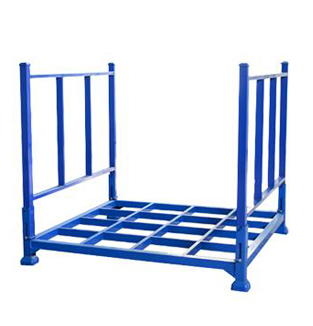
Stack racks are portable, modular storage racks designed to support goods above the floor and allow multiple loaded racks to be stacked safely on top of one another. They are especially useful for products that are bulky, irregular, seasonal, or unsuitable for direct floor stacking.
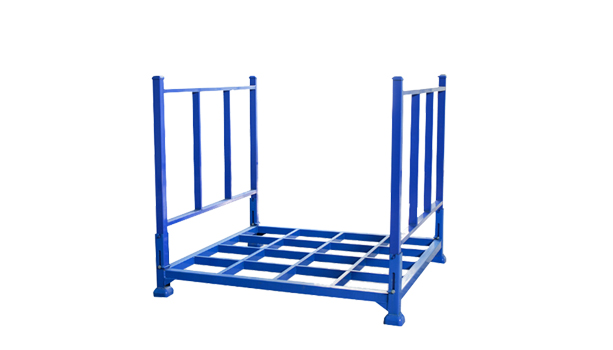
A complete stacking rack typically consists of one base and four removable posts. The base and posts are configured separately, which means warehouses can choose the right post height according to product height, load clearance, stacking requirements, and warehouse ceiling height. This modular structure makes stack racks highly flexible compared with fixed pallet racking or ordinary shelving.
Unlike permanent pallet racking, stackable racks usually do not require floor anchoring or complex installation. They can be repositioned with a forklift, used only when needed, and disassembled or nested to save space when empty.
How Stacking Racks Work
Stacking racks work by combining a strong steel base with removable vertical posts. Goods are placed on the base, and the posts create a stable support structure that allows another rack to be stacked above it.
The basic process is simple:
Load the base
Products are placed on the rack base. Depending on the design, the base may support palletized goods, tires, metal parts, bulk bags, crates, long materials, or irregular items.Insert the posts
Four posts are installed into the base corners. These posts determine the usable load height and stacking clearance.Move by forklift
The rack can be lifted and transported using a forklift, allowing goods to move between receiving, storage, production, staging, and shipping areas.Stack vertically
Loaded racks can be stacked several levels high to increase storage density. In many warehouse applications, stack racks are stacked 3–5 levels high, depending on load capacity and site conditions.Store compactly when empty
When not in use, the posts can be removed, and racks can often be nested or stacked compactly to reduce storage footprint.
This design gives warehouses the ability to create vertical storage only when needed. For seasonal inventory, temporary overflow, or frequently changing product lines, this flexibility can be more practical than installing fixed pallet racking.
Why Warehouses Prefer Stack Racks
Warehouses prefer stack racks because they solve several common storage problems at once: limited floor space, changing inventory, product damage from floor stacking, and the need for fast deployment.
1. They Add Vertical Storage Capacity Quickly
Many warehouses have unused vertical space but limited floor area. Stackable storage racks allow operators to turn floor-stacked goods into organized vertical storage without installing permanent racking systems.
This is especially valuable when a warehouse needs immediate extra capacity for:
Seasonal inventory
Promotional stock
Temporary overflow
Production staging
Slow-moving or low-volume SKUs
Instead of expanding the building or installing fixed racking, stack racks can be deployed quickly and adjusted as storage needs change.
2. They Avoid Permanent Installation
Traditional pallet racking usually requires layout planning, anchoring, installation labor, and sometimes permits or engineering approval, depending on local regulations. Stack racks offer a more flexible option for facilities that do not want to commit to permanent infrastructure.
They are particularly suitable for:
Rented warehouses
Temporary storage sites
Short-term projects
Warehouses with changing layouts
Facilities that cannot anchor racks into the floor
While local safety requirements should always be checked, stack racks generally reduce the complexity associated with fixed rack installation.
3. They Improve Product Protection
Floor stacking can create serious product damage, especially when goods are heavy, irregular, soft, or not designed to support weight from above. Stack racks help reduce direct product-on-product pressure by creating a steel support structure around the load.
This is useful for items such as:
Tires
Automotive parts
Fabricated components
Molds
Crates
Bulk bags
Long materials
Irregular industrial goods
By separating loads into individual rack units, warehouses can reduce crushing, deformation, scratching, and handling damage.
4. They Are Easy to Move and Reconfigure
One of the biggest advantages of stack racks is mobility. Since they can be moved by forklift, warehouses can reposition inventory without unloading and reloading products multiple times.
This helps improve material flow between:
Receiving areas
Production lines
Storage zones
Quality inspection areas
Picking and staging areas
Shipping docks
For operations where inventory locations change frequently, stack racks make it easier to adapt the warehouse layout without rebuilding fixed storage systems.
5. They Save Space When Not in Use
Permanent pallet racking occupies the same footprint whether it is full or empty. Stackable racks are different. When demand drops or seasonal inventory leaves the warehouse, empty racks can be disassembled, nested, or stacked compactly.
This makes stack racks especially attractive for businesses with fluctuating inventory cycles.
Common Applications of Stackable Storage Racks
For warehouses where storage needs change quickly, stackable storage racks provide a smarter alternative to fixed pallet racking. They can be moved by forklift, stacked vertically to unlock unused space, and stored compactly when not in use—delivering a flexible rack and stack storage solution without the cost or limitations of permanent racking.
In the automotive and tire industry, stack racks are commonly used for passenger tires, truck tires, OTR tires, wheels, rims, engines, transmissions, and other heavy parts. For tire distribution centers, they are especially valuable because they help reduce tire deformation caused by direct floor stacking while improving vertical storage density and mobility.
In manufacturing and industrial facilities, stacking storage racks are ideal for work-in-process items, raw materials, subassemblies, molds, fabricated components, and heavy parts that cannot be safely stacked on top of one another. They help organize production areas, reduce product damage, and improve material flow between workstations, storage zones, and shipping areas.
For warehouses, 3PL providers, and distribution centers, stackable pallet racks are often used for seasonal peaks, overflow SKUs, mixed pallets, low-volume products, and temporary storage expansion. When inventory profiles change frequently, stack racks allow operators to create flexible storage zones without committing to a fixed racking layout.
Stack racks are also useful for pipe, lumber, and long material storage, including tubing, bar stock, metal profiles, extrusions, and bundled materials. They can be a practical alternative when cantilever racking is too expensive, too permanent, or not flexible enough.
In addition, customized stack racks can support beverage, bottling, food, bulk bag, super sack, chemical, plastics, feed, recycling, and agricultural storage applications. With optional side rails, reinforced bases, hooks, or custom post heights, stack racks can be adapted to different load types and handling requirements.
Stack Racks vs. Traditional Pallet Racking
Both stack racks and traditional pallet racking are used to improve warehouse storage density, but they serve different operational needs. The right choice depends on whether your warehouse requires fixed long-term storage or flexible, movable storage capacity.
| Feature | Stack Racks | Traditional Pallet Racking |
|---|---|---|
| Installation | Usually no permanent installation required | Requires installation and anchoring |
| Flexibility | Highly flexible and movable | Fixed layout |
| Storage Density | Can stack goods 3–5 levels high depending on design and load | High vertical storage with fixed pallet positions |
| Best For | Seasonal storage, overflow, bulky goods, temporary storage | Long-term pallet storage and frequent pallet access |
| Mobility | Forklift movable | Not portable after installation |
| Layout Changes | Easy to reconfigure | More difficult and costly to modify |
| Space When Empty | Can be stored compactly | Occupies permanent floor space |
| Initial Deployment | Fast | Requires planning and installation |
| Product Protection | Helps prevent damage from direct floor stacking | Protects pallets in fixed rack positions |
Stack racks are often the better choice when your warehouse needs temporary capacity, seasonal storage, flexible layouts, or portable product handling.
Traditional pallet racking is usually better when you need fixed pallet positions, high-frequency picking, long-term storage locations, and direct access to every pallet.
For many warehouses, the best solution may include both systems: pallet racking for stable inventory and stackable racks for overflow, seasonal goods, bulky items, or temporary storage zones.
Get Custom Stack Racks for Your Warehouse
Choosing the right stack rack depends on your product size, load weight, stacking height, forklift handling method, warehouse clearance, and storage workflow. At Chaoyu Rack, we provide customizable stacking stillage racks designed for flexible, high-density warehouse storage.
Our stack racks can be customized by:
Base size
Post height
Load capacity
Stackable height
Surface treatment
Forklift entry direction
Side rails, hooks, or reinforced structures
Application-specific design requirements
If you are not sure which stackable rack is right for your warehouse, our team can help you evaluate your storage needs and recommend a suitable design.
Contact Chaoyu Rack today to get a custom stack rack quote and build a more flexible, space-efficient warehouse storage system.